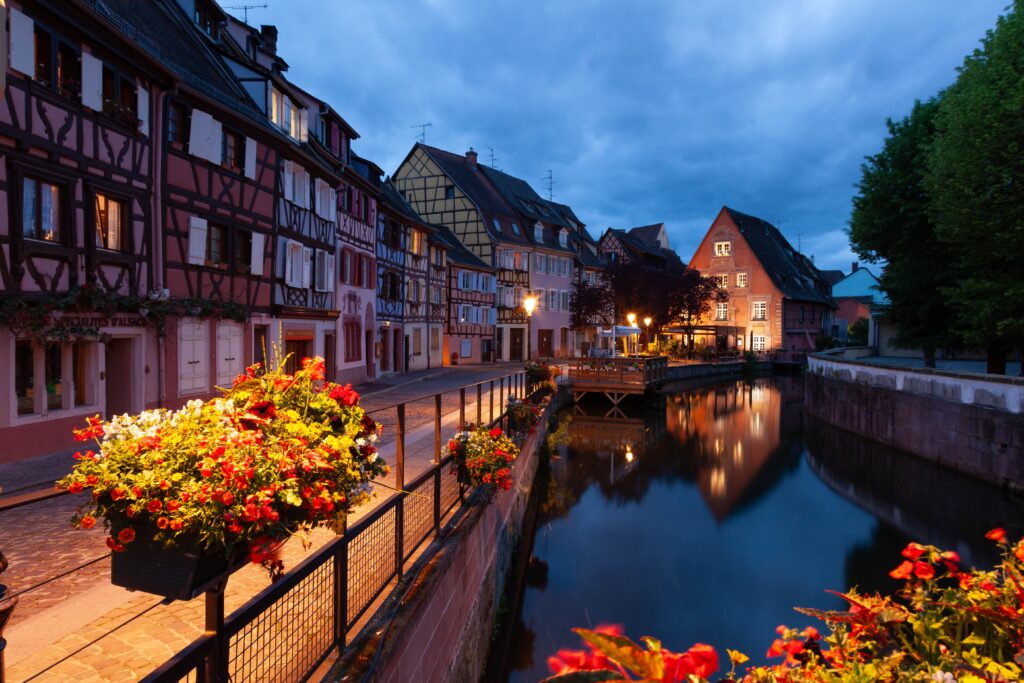
There are places in France where you immediately feel at home. And then there is Alsace. Located in the far northeast of France, near the German border, Alsace has a character all its own. Its villages are filled with half-timbered houses, its vineyards stretch at the foot of the Vosges Mountains, and its cuisine reflects centuries of French and German influences.
It is a region where you can spend the morning discovering a medieval city, the afternoon enjoying wine in a vineyard, and the evening savoring a hearty local meal. Its charm lies in the way these experiences flow naturally together.
Why visit Alsace?
Alsace offers a different facet of France. The region’s history, geographical location, and cultural influences have forged a unique identity that can be admired in its architecture, tasted in its cuisine, and discovered in its cities.
For travelers who love combining culture, landscapes, gastronomy, and history, Alsace offers a multitude of discoveries without having to travel long distances.
The best places to visit in Alsace: Strasbourg, Colmar and the charming villages
From a historic European city to small wine villages surrounded by vineyards, Alsace is full of places that are worth exploring. Each offers a slightly different view of the region; it is therefore worth going beyond the most well-known names.
Strasbourg
Strasbourg is an excellent gateway to Alsace. The regional capital offers a fascinating blend of medieval architecture, large European institutions, and neighborhoods shaped by its location on the border between France and Germany.
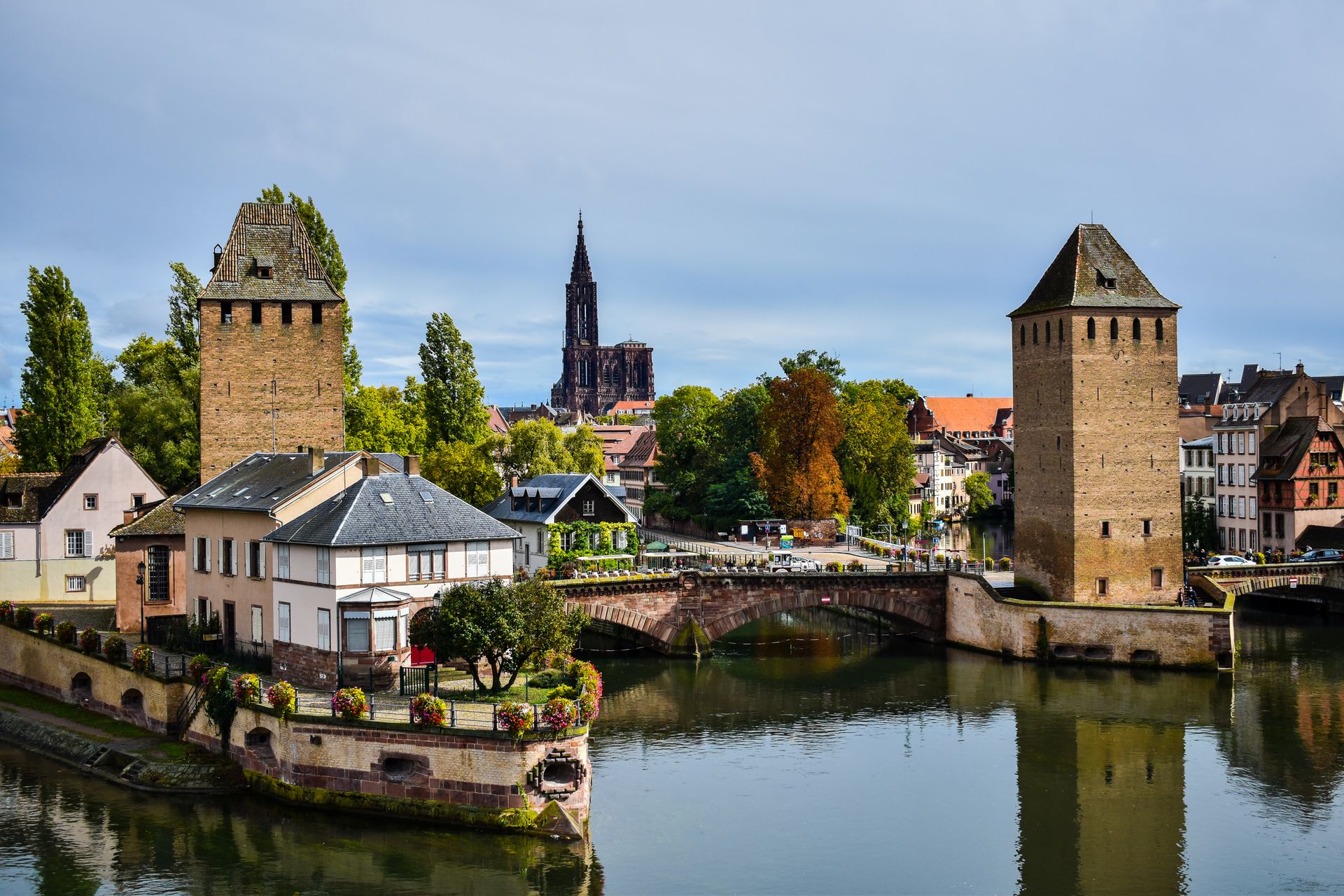
The historic center, the Grand Île, is the ideal starting point. The Strasbourg Cathedral dominates the skyline, while the surrounding streets lead to neighborhoods such as Petite France, with its canals, old bridges and traditional houses.
Colmar
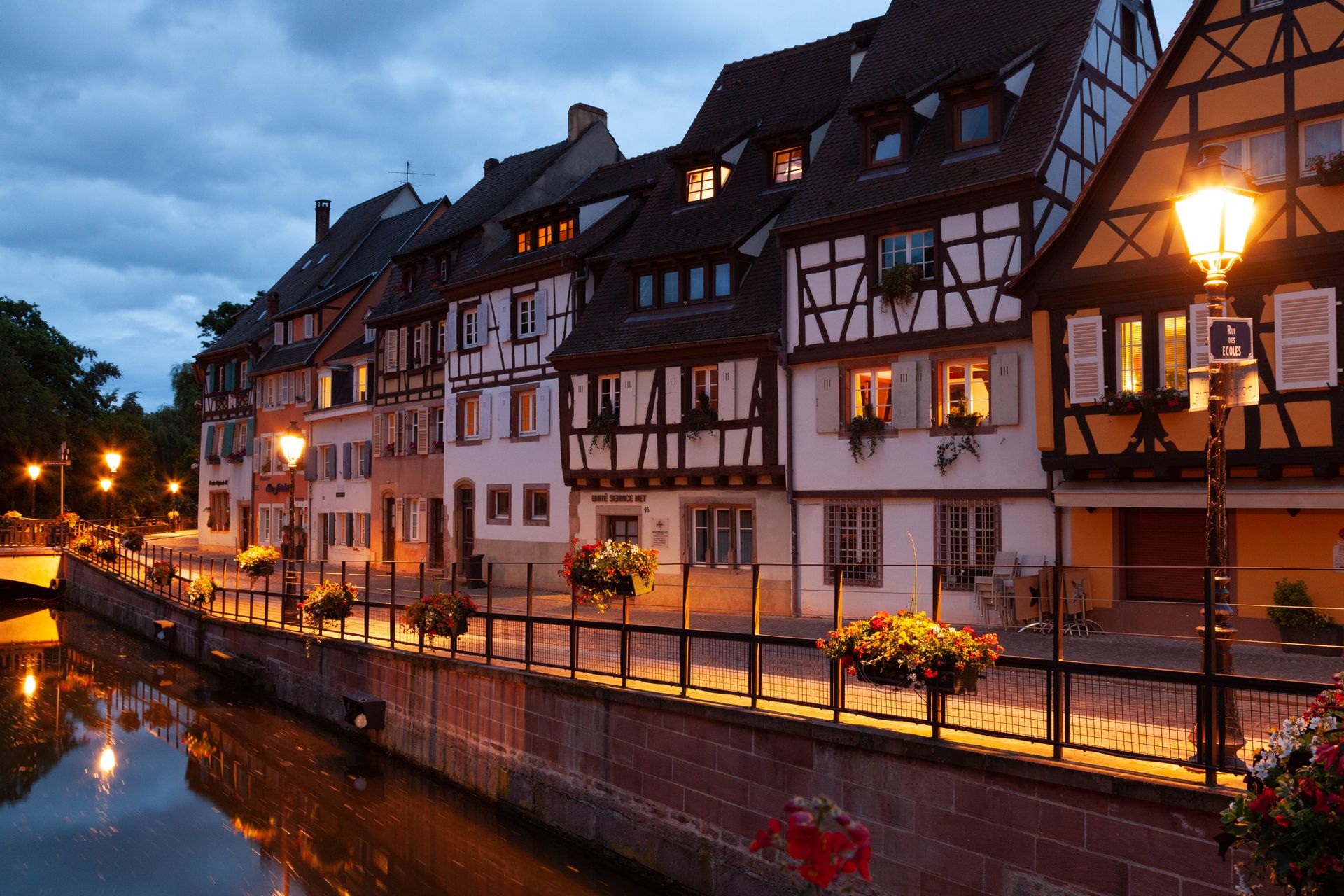
Colmar is undoubtedly the city that comes to mind for most people when they think of Alsace. Its historic center is remarkably well preserved, with its colorful facades, canals, and narrow streets that are easy to explore on foot.
This is the kind of place where it’s great to wander around without a specific itinerary. Take the time to explore the old streets, stop for a bite to eat, and admire the architecture that surrounds you.
Eguisheim
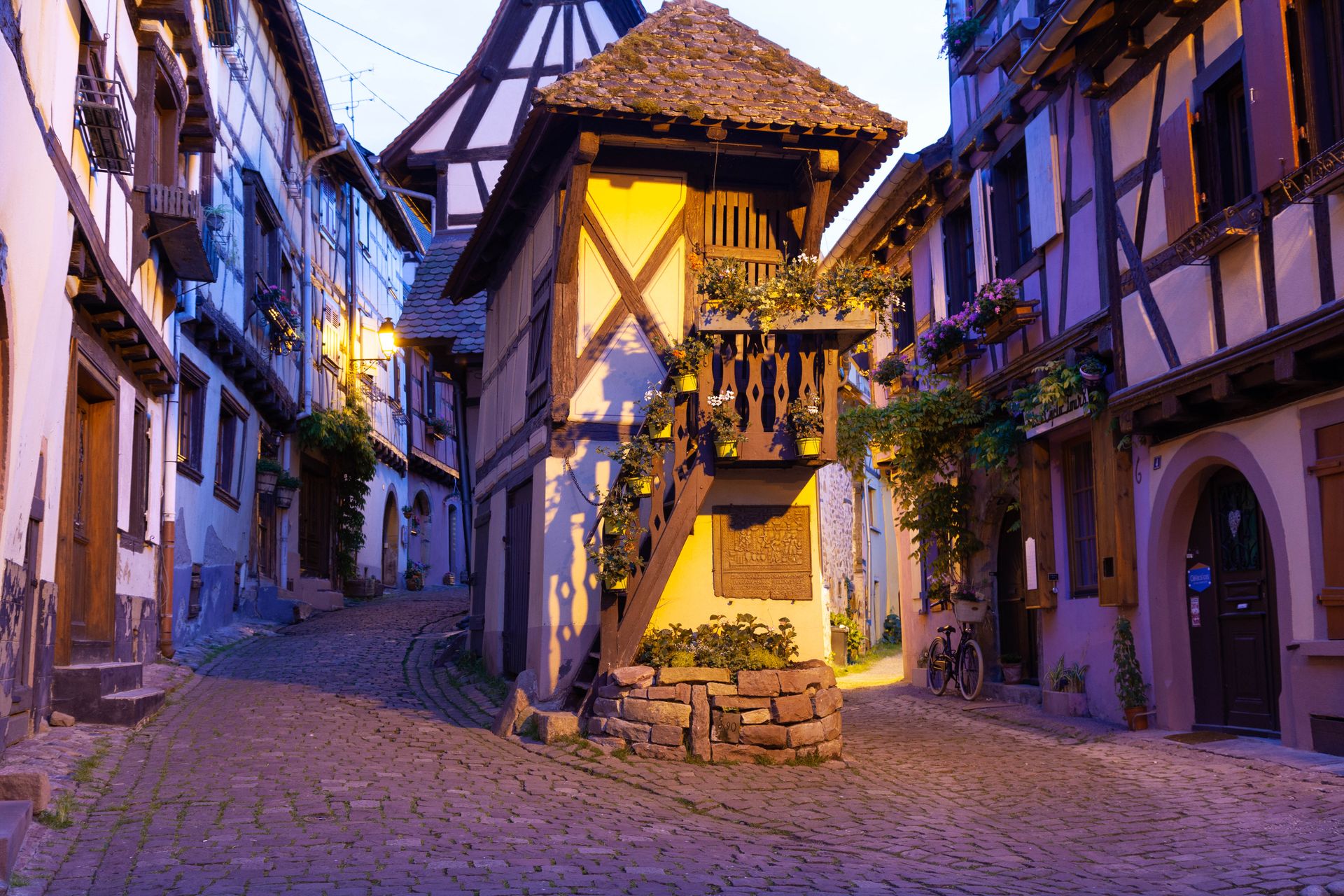
Nestled amidst the vineyards, Eguisheim offers a glimpse of the traditional village character of Alsace. Its medieval center is renowned for its narrow streets, colorful buildings, and half-timbered houses.
The village is small enough to be explored at a leisurely pace, making it an ideal stop for travelers who are taking the Alsace Wine Route.
Riquewihr
Riquewihr is another magnificent wine-growing village with a well-preserved historical center. Its old buildings, its cobblestone streets, and the surrounding vineyards give it that typical Alsatian setting that many visitors come to seek out.
A walk through the village will also allow you to understand how closely the wine culture of the region and its historic towns are linked.
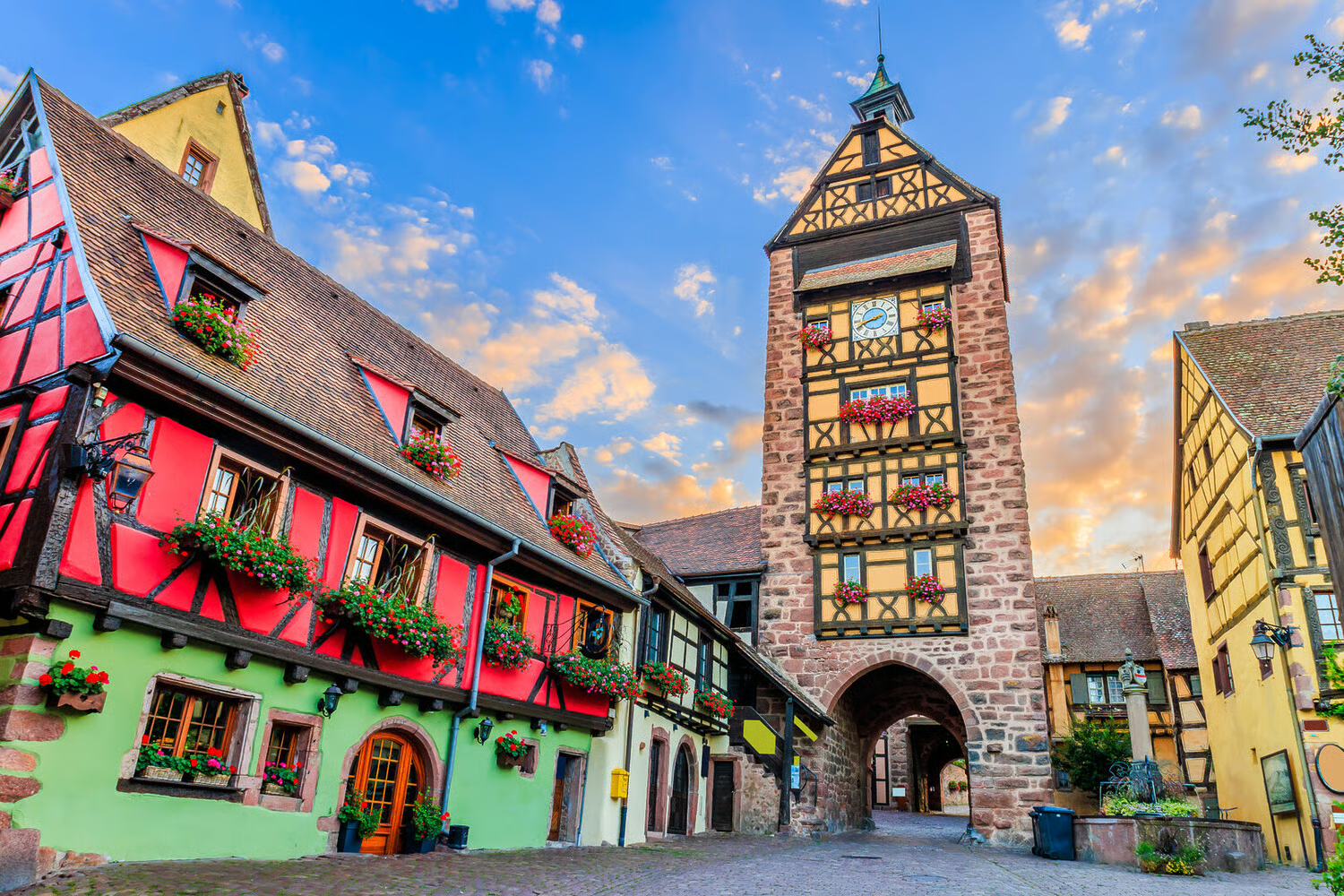
Kaysersberg
Kaysersberg combines the charm of an old Alsatian village with a setting surrounded by vineyards and hills. Its historic center is filled with traditional houses, old bridges, and remnants of its medieval past.
This is another essential step for anyone who goes to discover the villages of the Wine Route.
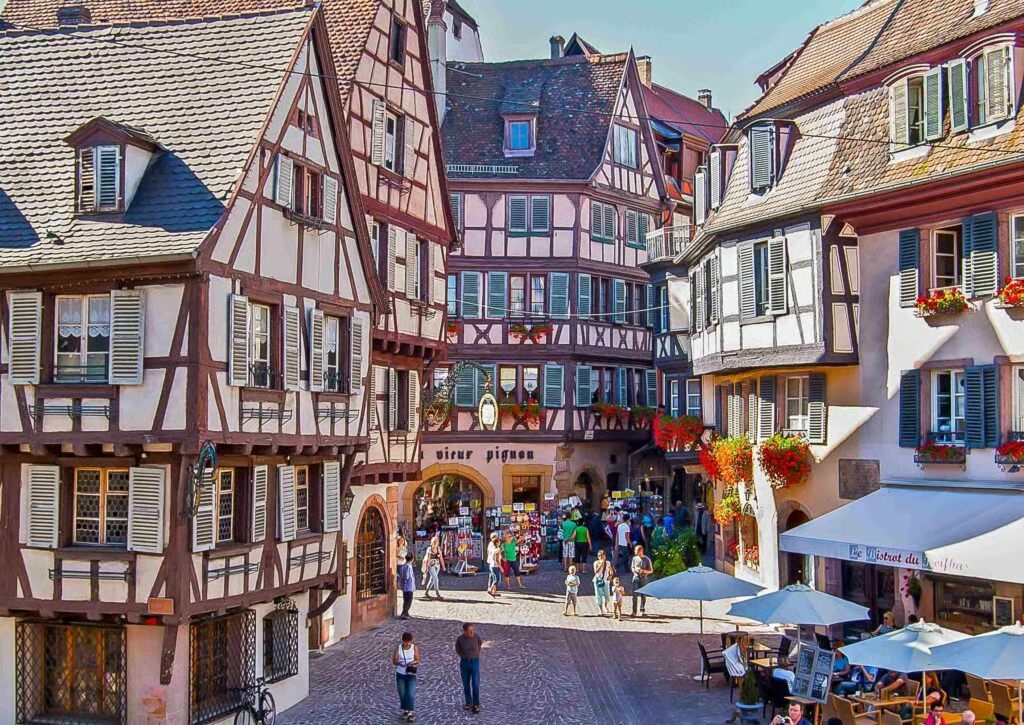
Discover the Alsace Wine Route and its famous vineyards
The Alsace Wine Route passes through some of the most beautiful landscapes in the region.
The vineyards cover the lower slopes of the Vosges, and villages emerge between the rows of vines. The landscape changes with the seasons, but autumn is particularly captivating when the vineyards are adorned with warmer colors.
Wine is also an excellent way to get to know the region. Alsace is renowned for its white wines made from varieties such as Riesling, Gewürztraminer, Pinot Gris and Muscat.
A visit does not necessarily have to take the form of an official guided tour of the vineyards. You can stop at a family-run wine estate, visit a cellar, taste some local wines, and chat with those who make them. For travelers who appreciate gastronomy and drinks, this is one of the simplest ways to discover Alsace beyond its famous streets and monuments.
What to eat in Alsace: traditional cuisine and local specialties
Alsace has one of the most characteristic regional gastronomic cultures in France.
You will find dishes that reflect both French and German traditions, often served in generous portions. The stuffed choucroute, made from fermented cabbage and traditionally served with various meats, is one of the best-known examples.
The flambé tart, or flammekueche, is another local classic. Its thin and crispy crust is traditionally filled with cream, onions and bacon. It is also enjoyed both during a casual lunch and accompanied by a glass of local wine.
There is also the baeckeoffe, a stewed dish made with meat, potatoes and vegetables, and the kougelhopf, a ring-shaped cake that can be sweet or savory.
Food here tells part of the story of Alsace. You can see the region's mixed heritage on the plate just as clearly as you can see it in its architecture.
Discover the history, architecture and cultural heritage of Alsace
Alsace has changed hands several times between France and Germany, notably during the conflicts of the 19th and 20th centuries. This history has marked the region’s language, architecture, cuisine, and identity.
This is particularly evident in the half-timbered houses of its villages, the fortified cities, and the various architectural influences found throughout the region.
The Cathedral of Strasbourg is one of the most emblematic monuments, while the historic villages offer a more intimate insight into Alsace’s past. The Château de Haut-Kœnigsbourg is another must-see stop. Perched high above the surrounding countryside, this medieval castle offers an impressive view of the Alsace Plain and allows visitors to appreciate the region’s strategic importance over the centuries.
In Alsace, history is never far away. Even a simple walk through an old village can reveal elements about the inhabitants, the borders, and the traditions that have shaped the region.
Activities in Alsace beyond the villages
Alsace has a lot to offer travelers who want to spend time outdoors.
The Vosges rise to the west of the vineyards and offer a different perspective on the region. Forests, hiking trails, mountain lakes, and panoramic viewpoints make this region a place worth exploring beyond the famous cities.
You can spend part of the day strolling through a wine village and the other part hiking in the surrounding countryside. This contrast is part of the pleasures of a stay in Alsace. The region is perfect for travelers who want to combine sightseeing and outdoor experiences with a more leisurely pace.
And you don’t have to spend every day ticking off attractions on a list. Some of the best moments actually arise when you take your time, stop for lunch, or simply enjoy the scenery between destinations.
How to make the most of Alsace
It is often tempting to consider Alsace as just a stopover between two major French destinations. That would be missing out on a great deal of what makes the region interesting. Take the time to wander around Strasbourg without rushing to the next attraction. Spend an afternoon in Colmar. Drive through the wine villages. Stop for lunch in a small restaurant. Visit a wine estate. Take a walk in the countryside. Sit down for a long dinner.
It is by combining these moments that one truly experiences Alsace. One finds both the grand cathedral and the quiet road of the vineyards. The medieval village and the modern European city. The wine cellar and the mountain trail. The French traditions coexist with the influences that have crossed the Rhine for centuries.
It’s this mix of things that makes Alsace worth including in your itinerary in France. People come here for its beautiful cities, but they stay because there’s so much more to discover beyond them.

